Development and Challenges of RC Models, Drones, and Their Remote Controllers
—— By Xie Bo, Shenzhen RadioLink Electronics
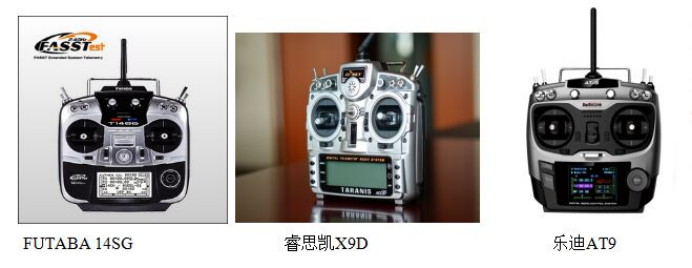
Model aircraft sports originated in the early 20th century and began to gain popularity in China after the 1940s. Early model aircraft were mostly uncontrolled or line-controlled, while wireless remote control devices gradually became mainstream in the 1970s. Before 2003, mainstream model aircraft equipment was mainly manufactured by enterprises from Japan, Germany, South Korea and China’s Taiwan region. Representative overseas brands included Japan’s FUTABA, JR, HEROROB, SANWA and HIROBO, Germany’s GRAUPNER, and South Korea’s HITECH. Taiwan-based Thunder Tiger, Sino-Hobby and ALIGN entered the Chinese mainland market and set up factories at an early stage, fostering a large number of professional talents for the domestic model aircraft industry.
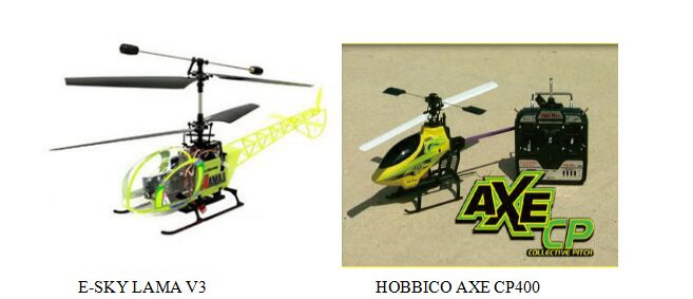
After 2003, a host of local Chinese enterprises were established. Mastering remote control and gyroscope technologies, these enterprises began to produce model aircraft equipment. Featuring high quality and ultra-low prices — less than one-fifth of Japanese products — domestic products achieved explosive growth in the U.S. market. Classic products of this period included the 4-channel coaxial dual-rotor LAMA V3 from Shenzhen Esky, which won wide popularity for its exquisite craftsmanship and appearance; the LAMA V2 from Guangzhou Walkera; the Apache drone from Shenzhen KDS; and the HELI-MAX CP400 3D helicopter, independently developed by Shenzhen Ruida as an ODM product for the U.S. brand Hobbico.
With the booming development of finished model aircraft products, a complete industrial chain of supporting professional equipment took shape, covering remote controllers, flight controllers (early products adopted gyroscopes), chargers and electronic speed controllers (ESCs). The R&D and production of remote controllers require large upfront investment, involving professional technologies such as aircraft functional adaptation, wireless communication and structural industrial design. Moreover, remote controllers are highly susceptible to external environmental interference, and their stability plays a decisive role in the safety and reliability of the entire aircraft. After years of development, Chinese brands have broken the monopoly of foreign brands and steadily captured global market share. The development of remote controllers has gone through multiple technical stages, as detailed below.
1. Era of Low-Frequency FM Analog Modulation
From 2001 to 2008, model aircraft remote controllers mainly adopted three dedicated frequency bands: 35MHz, 40MHz and 72MHz. Each band had a fixed bandwidth of 1MHz, and frequency usage regulations varied by country — for example, the 72MHz band was prohibited in Japan. In this period, devices adopted analog FM modulation and PPM signals. Remote controllers and receivers from different brands were mutually compatible, and users could replace pluggable crystals with different frequency points (e.g., 72.180MHz, 72.890MHz) to avoid signal conflict. A maximum of six users could operate devices simultaneously in the same venue without mutual interference.
Leading foreign brands at that time were FUTABA, JR and HITECH. Domestic manufacturers included Shenzhen Zhenhua, Esky, Guangzhou Walkera, Xi’an Incubator, Shenzhen RadioLink, Global Eagle, Flysky, Dongguan FrSky, Guangzhou Chiyuan and Wuxi Corona (receiver-only manufacturer). Among them, Corona’s double-conversion receivers outperformed all domestic and foreign counterparts, earning high reputation in the global market. It marked the first time a Chinese brand surpassed top Japanese brands such as FUTABA and JR in core performance.
2. Era of 2.4G Digital Modulation
With the growing number of model aircraft enthusiasts, frequency collision became common in public flying venues, causing nearby remote controllers to seize control of others’ aircraft. Digital modulation with wider bandwidth became an inevitable trend for the industry. The 2.4GHz band (2400MHz~2483.5MHz), a universal ISM (Industrial, Scientific and Medical) frequency band, is license-free worldwide for all electronic devices that comply with regional wireless standards such as FCC (U.S.) and CE (EU). Starting from 2008, the model aircraft remote control industry fully entered the 2.4G era, reshaping the brand competition landscape.
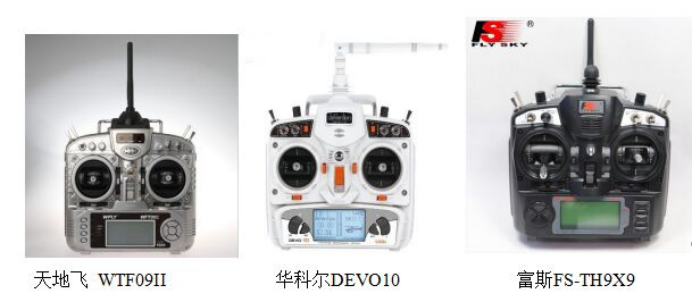
Japanese brands FUTABA and JR remained industry leaders, while the U.S. brand Spektrum captured most of the American market by virtue of 2.4G technology. German GRAUPNER and South Korean HITECH gradually lost market share due to low cost performance. Domestic active manufacturers at that time included Walkera, Flysky, Wfly, RadioLink, Chiyuan, Shenzhen Aite, Xingyaohua, Mike and Wuxi Radiomaster.
Currently, the mainstream domestic brands in the Chinese market are Wfly, Flysky, RadioLink and Radiomaster. In overseas markets, Flysky once occupied a large market share relying on price advantages; Radiomaster is widely praised globally for its mature open-source software and top-tier hardware design, even surpassing the local U.S. brand Spektrum in the U.S. market. Since launching new products in 2015, RadioLink has achieved continuous month-on-month growth in domestic and global market share.
3. Application of 2.4G Spread Spectrum Technology
As an open universal band, the 2.4G spectrum is shared by massive electronic devices such as Wi-Fi and Bluetooth. Although the ISM band offers a total bandwidth of 83.5MHz — far wider than the 1MHz bandwidth of traditional low-frequency dedicated bands like 72MHz, supporting simultaneous operation of more remote controllers — and digital modulation supports unique ID configuration for each controller to eliminate cross-control risks, signal interference has become increasingly severe. The widespread popularity of household and urban Wi-Fi has led to ubiquitous spectrum interference. Even premium traditional remote controllers such as FUTABA now face shortened control range and signal loss caused by interference from third-party controllers and urban Wi-Fi signals, making anti-interference capability a core, life-or-death competitiveness for remote control manufacturers.
Spread spectrum communication is the most effective anti-interference technology, with two mainstream solutions: DSSS (Direct Sequence Spread Spectrum) and FHSS (Frequency Hopping Spread Spectrum). FUTABA’s ASST technology and Radiomaster’s solutions adopt FHSS; Walkera, Wfly and RadioLink adopt DSSS.
In terms of hardware solutions: Radiomaster and the latest FUTABA remote controllers adopt TI CC2500 chips with FSK data modulation and open-source FHSS algorithms; Walkera and Wfly use Cypress CYRF6936 chips with built-in FSK-based DSSS technology; RadioLink’s T-series (T7F, T8F, etc.) adopts TI CC2500 chips, while its A-series (AT9, AT10) uses TI CC2533 chips with self-developed QPSK-based DSSS technology; Flysky adopts Taiwan ASH’s A7105 chips with pure FSK modulation and no built-in spread spectrum function.
4. Era of 2.4G COFDM Integrated Video Transmission & Remote Control Drones
Since 2012, drone flight controllers have been widely applied to various aircraft, especially multi-rotor drones, giving rise to FPV (First-Person View) beyond visual line-of-sight flight. Technological advancements including attitude stabilization, barometric altitude hold, GPS positioning and 3-axis gimbal stabilization have greatly boosted the development of FPV flight, generating strong demand for real-time video transmission. The mainstream DIY solution adopts 5.8G analog video transmission paired with 2.4G remote control to avoid mutual interference via different frequency bands.
In 2015, DJI widely adopted the wireless solution developed by Shanghai CoreChips, which realizes integrated wireless links for both remote control and video transmission on the 2.4G band. Specifically, the remote control adopts low-rate narrowband FHSS spread spectrum communication, while video transmission adopts high-spectrum-efficiency superimposed channel COFDM broadband transmission (similar to 4G mobile communication technology). COFDM supports ultra-high transmission rates within fixed bandwidth, enabling longer transmission distances at optimized low-rate operation. By isolating control and video signals via independent channels, the solution achieves interference-free long-distance remote control and high-definition digital video transmission, while supporting real-time feedback of aircraft status data.
Challenges Facing Modern Remote Controllers
The iterative upgrading of aircraft and increasingly complex electromagnetic environments have put forward higher technical requirements for remote controllers, with core challenges covering three dimensions: functional adaptation, communication performance and industrial design.
Functional Challenges
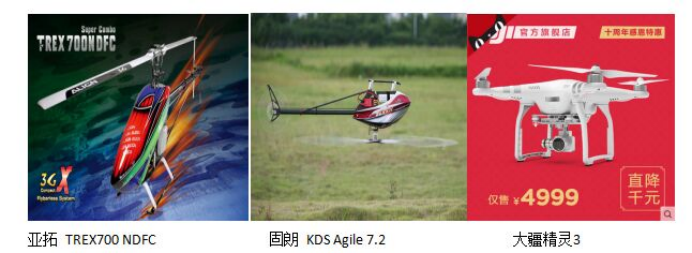
The development of aircraft has gone through three distinct stages: fixed-wing, helicopter and multi-rotor. Before 2003, fixed-wing aircraft dominated the market. After 2003, mature gyroscope technology lowered the operation threshold of helicopters, making them mainstream products. In 2012, DJI exhibited multi-rotor drones at the Nuremberg Exhibition in Germany. Supported by advanced flight control technology, multi-rotor drones feature low production difficulty and zero entry barriers for novice operators, quickly dominating the global market.
The market fate of aircraft products has always been determined by three core attributes: usability, practicability and affordability. With the continuous upgrading of fixed-wing and helicopter flight control technologies, the existing market pattern may change again. New technical features of multi-rotor flight controllers, such as S-BUS interface, OSD data feedback and online firmware upgrade, have raised new requirements for remote controllers.
A professional universal remote controller needs to adapt to all mainstream aircraft types with humanized operation logic. Designers must fully master the functional characteristics of all aircraft models and synchronize product iteration with market demand, requiring long-term technical accumulation and continuous innovative breakthroughs. Such long-term invisible R&D investment and capability balancing act pose a major challenge for manufacturers.
Communication Challenges
Against the backdrop of limited frequency resources and increasingly crowded wireless electromagnetic environments, modern remote controllers face complex and diverse interference threats, making communication technology breakthroughs the only way forward. Spread spectrum technology has become an industry necessity.
DSSS excels at suppressing co-frequency interference but suffers from significantly increased bit error rates under wideband strong interference; FHSS avoids interference via frequency hopping but cannot suppress co-frequency interference. Notably, DSSS is implemented via built-in chip functions, while FHSS relies entirely on self-developed software algorithms. Since remote control is a one-way communication system without handshake protocols, chip parameters vary by brand, and no universal mature solution is available. Manufacturers need to independently develop communication algorithms with ultra-high real-time performance. Immature algorithms will cause asynchronous signal disconnection and fake crashes even in interference-free environments, which is the core reason why most domestic manufacturers have not adopted FHSS.
The hybrid dual spread spectrum technology combining DSSS and FHSS can comprehensively improve the anti-interference capability of remote controllers and effectively solve mainstream signal interference problems. With the continuous cost reduction of OFDM chips, OFDM technology will become the future development direction of remote control communication.
Industrial Design Challenges
Excellent industrial design requires not only an attractive appearance recognized and favored by model enthusiasts, but also humanized ergonomics, practical operation logic and optimized UI interface design, which can only be achieved with in-depth user experience accumulation. Due to the shortage of interdisciplinary design talents, most domestic manufacturers choose low-risk imitation design, with very few original independent designs gaining market recognition. DJI’s remote controllers adopt fully independent industrial design and are widely popular, though they are non-professional universal devices. RadioLink AT9 series, with original independent design, has been widely recognized by mainstream model enthusiasts.
After nearly a decade of accumulation and development, Chinese remote controller brands have stepped out of the entry-level stage, achieving performance comparable to high-end international products and steadily expanding global market share. However, the industry still lacks core original innovation and technical heritage, requiring long-term persistent R&D breakthroughs. Every product iteration brings both opportunities and risks, and many industry leaders have been eliminated in technical upgrades. Only by accumulating capabilities steadily, embracing changes actively and adhering to independent innovation can manufacturers seize opportunities in each industrial iteration.